

Laboratory courier pickup delays often happen when shipments are not ready, pickup contacts are unavailable, paperwork is incomplete, or receiving facilities cannot accept deliveries. Before booking, confirm shipment readiness, approved packaging, pickup contacts, and laboratory receiving hours. Any special handling requirements or transportation deadlines should follow the receiving laboratory’s procedures and be communicated to dispatch.
A courier arriving at a laboratory should not have to wait while staff finish paperwork, locate a shipment, or figure out who can release it. Yet these situations can interrupt pickup schedules and create unnecessary complications for healthcare facilities.
Whether you manage a medical office, diagnostic laboratory, or healthcare business, a few checks before scheduling transportation can make the process easier.
At Envoy Courier Services, we know that clear communication matters when coordinating time-sensitive deliveries. Here’s what your team should confirm before requesting a laboratory pickup.
Readiness Problems That Disrupt a Laboratory Pickup
Many laboratory courier pickup delays begin before the driver reaches the facility.
A courier may arrive at the correct location at the agreed time, only to discover that the shipment is still being prepared.
These situations create scheduling problems for the sender, courier, and receiving laboratory.
Common Reasons Laboratory Pickups Get Delayed
Several issues can prevent a scheduled pickup from proceeding as planned:
- Shipments are not ready: Items are still being collected, processed, packaged, or prepared for transportation.
- Packaging is incomplete: The shipment has not been prepared according to the laboratory’s applicable packaging requirements.
- Pickup contacts are unavailable: The person responsible for releasing the shipment cannot be reached.
- Documentation is missing: Required forms, shipment details, or other transport paperwork have not been completed.
- Pickup instructions are unclear: The courier does not know which entrance, department, or receiving area to use.
- Delivery timing has changed: The destination can no longer accept the shipment during the originally planned window.
For example, a medical office might schedule a courier pickup before its laboratory staff have finished preparing the day’s outgoing materials.
When the driver arrives, the shipment may not be ready for release.
This could affect the delivery schedule, particularly when another facility expects the shipment within a specific receiving window.
Confirm Laboratory Pickup Readiness
Before booking, designate someone to verify that the shipment can be released at the requested pickup time.
That person should confirm that all preparation steps required by the laboratory have been completed.
For shipments subject to specimen-specific procedures, readiness also includes confirming that applicable packaging, labeling, documentation, and handling requirements have been satisfied.
Laboratory pickup readiness should be established before the courier arrives, not after.
Confirm Contacts, Labels, and Required Paperwork
A successful pickup depends on more than having a package waiting at the front desk.
The courier needs clear instructions about where to collect it, who can release it, and what documentation accompanies the shipment.
Identify the Correct Pickup Contact
Laboratories and healthcare facilities often have multiple departments, entrances, and staff members responsible for different tasks.
Providing only the facility’s main telephone number may not be enough.
Before booking, confirm:
- The name or role of the authorized pickup contact.
- The appropriate department or collection point.
- A telephone number dispatch can use for coordination.
- The scheduled pickup window.
- Any check-in or access requirements.
If the designated contact becomes unavailable, another authorized employee should know how to handle the scheduled handoff.
This is especially useful when pickups occur during shift changes, lunch breaks, or other busy periods.
Check Labels and Shipment Documentation
Incorrect or incomplete information can cause confusion during both pickup and delivery.
The sending facility should verify that packages carry the required identification and markings according to its procedures and applicable transport rules.
Depending on the shipment, documentation may include a shipment manifest, laboratory submission paperwork, transport records, or other required information.
For regulated biological materials, classification and packaging requirements must be determined by appropriately responsible personnel before offering the shipment for transport.
The U.S. Department of Transportation outlines requirements for transporting infectious substances, including rules involving classification, packaging, and hazard communication.
These requirements should not be replaced by general courier instructions.
Prepare for a Clear Laboratory Shipment Handoff
A laboratory shipment handoff should clearly establish which prepared shipment is being transferred and who is authorized to release it.
If the facility requires signatures, handoff records, or chain-of-custody documentation, communicate those requirements before the scheduled pickup.
The sender should also confirm that any required documentation method is supported by the courier arrangement.
Clear handoff procedures reduce unnecessary questions when the driver arrives.
Coordinate With the Receiving Laboratory
A pickup cannot be planned properly without considering the receiving facility.
Even if the courier collects the shipment on schedule, delivery may become complicated if the destination is closed, the appropriate staff are unavailable, or the shipment arrives outside the accepted receiving window.
Verify Laboratory Receiving Hours
Before scheduling transportation, confirm the destination’s actual lab receiving hours.
Do not assume that a hospital, clinic, or laboratory accepts every type of delivery throughout its posted operating hours.
A facility may have different schedules for general operations, specimen receiving, and other laboratory deliveries.
Ask the receiving laboratory:
- What are the approved receiving hours for this shipment?
- Is there a specific department or entrance for deliveries?
- Does the shipment require a scheduled receiving appointment?
- Who is authorized to accept the delivery?
- Are there cutoff times or other restrictions that apply?
These details are especially important when arranging deliveries late in the day or around weekends and holidays.
Confirm the Receiving Contact
A shipment arriving at the correct building does not necessarily mean it has reached the appropriate department.
Large healthcare facilities may have separate receiving areas for supplies, diagnostic materials, and administrative deliveries.
Provide the name or role of the intended recipient and clear delivery instructions.
If the receiving laboratory requires a documented handoff, confirm the process before the shipment leaves the pickup location.
What If the Receiving Laboratory Is Closed?
If the receiving location cannot accept the shipment during the expected delivery window, contact the responsible laboratory personnel and dispatch before proceeding.
The laboratory must determine the appropriate next step under its approved procedures.
Do not assume that leaving a shipment unattended, using an alternate entrance, or holding it until the next day is acceptable.
Any revised delivery arrangement should be authorized and confirmed before transportation continues.
Share Shipment-Specific Handling Instructions
Laboratory-related deliveries can involve different materials with different transportation requirements.
A shipment of office documents or unused laboratory supplies does not necessarily need the same arrangements as an approved biological sample.
For this reason, dispatch must understand what is being transported before confirming acceptance.
Follow the Laboratory’s Approved Procedures
The sending and receiving laboratories should identify the applicable requirements for the shipment.
These may include:
- Packaging and containment requirements.
- Required shipment classification and markings.
- Handling and orientation instructions.
- Temperature or environmental conditions.
- Transport time restrictions.
- Documentation and custody procedures.
- Approved responses to delays or delivery exceptions.
There is no single temperature, holding period, or packaging method that applies to every laboratory specimen.
Requirements depend on the particular material, the testing procedure, applicable regulations, and the receiving facility’s instructions.
The laboratory should establish those requirements rather than asking the courier to make clinical or technical decisions about specimen suitability.
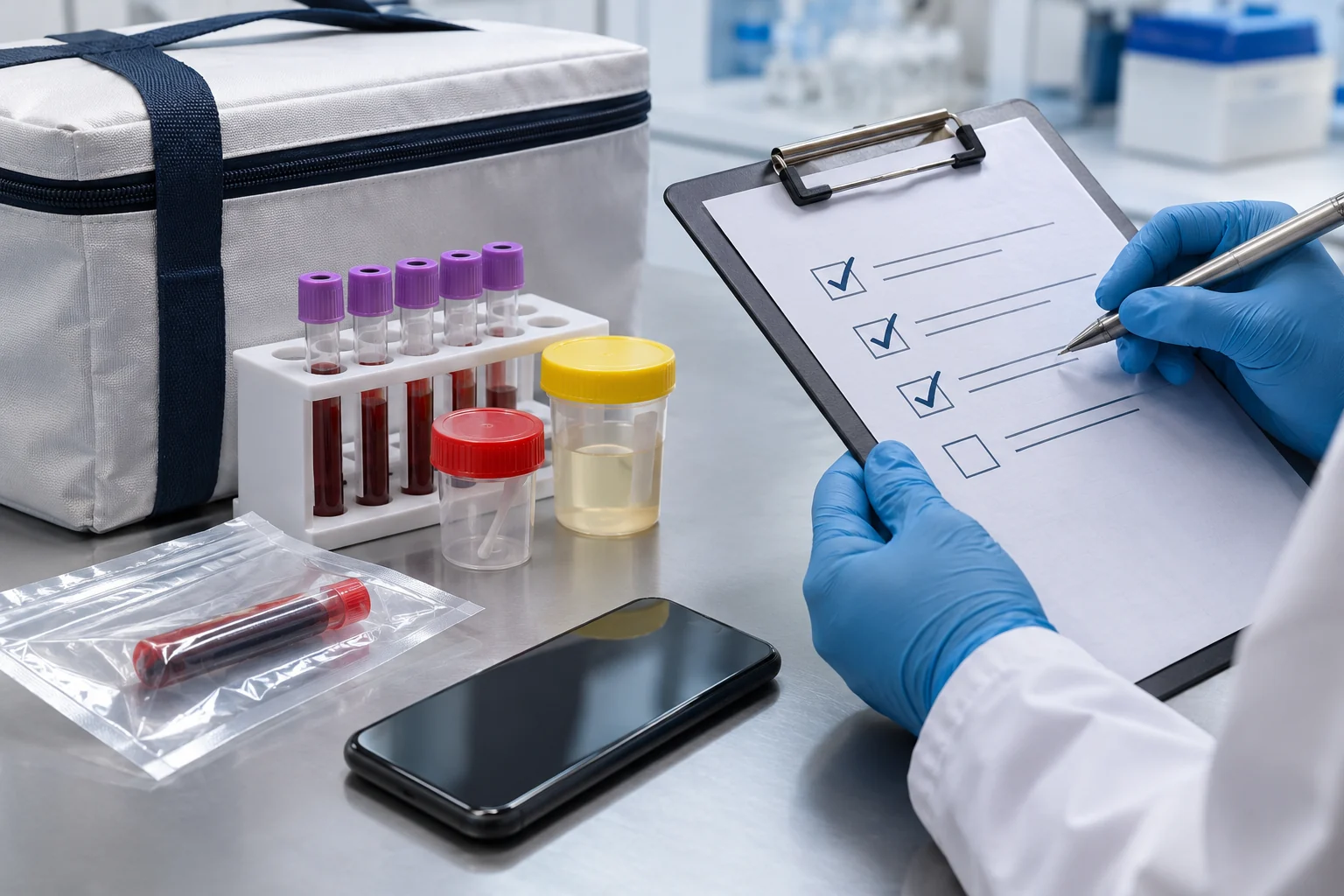
Communicate Requirements Before Dispatch
If an approved shipment needs particular handling conditions, tell dispatch before booking.
For example, a laboratory may have established specific transport conditions for a particular type of sample.
Those requirements must be reviewed in advance so dispatch can determine whether the requested service is suitable and available.
Do not assume that every courier vehicle or delivery service can accommodate specialized temperature-control, containment, or monitoring needs.
Likewise, a courier booking should not be treated as confirmation that a shipment meets applicable regulations.
The sending facility remains responsible for ensuring that its preparation and release procedures are followed.
Protect Sensitive Information
Laboratory shipments may involve confidential information.
Use the facility’s approved communication and documentation methods when providing necessary shipment details.
Avoid including unnecessary patient information in routine scheduling messages.
When custody records or secure communication procedures are required, confirm those arrangements with dispatch before pickup.
Plan Recurring Pickup Windows Where Appropriate
Laboratories and medical practices with predictable delivery needs may benefit from arranging recurring pickup schedules.
A recurring window gives staff a consistent time to prepare shipments and coordinate with receiving locations.
However, scheduling the same pickup every day does not automatically eliminate delays.
Match Pickup Times to Laboratory Workflows
Consider a medical practice that prepares outgoing materials near the end of each business day.
Scheduling its pickup before staff have completed their preparation tasks could lead to repeated waiting time.
A more practical arrangement would account for when shipments are typically ready, the destination’s receiving requirements, and the time needed for transportation.
The right pickup window should reflect the facility’s actual workflow rather than an arbitrary time.
Keep Staff Informed About Recurring Arrangements
Recurring pickups work best when the people preparing shipments know the schedule.
Make sure responsible employees understand:
- Which days pickups are expected.
- When shipments must be ready.
- Where approved items should be placed for collection.
- Who is responsible for releasing them.
- How to report schedule changes.
A simple internal checklist can help staff maintain consistency, especially when responsibilities rotate between employees.
Review Recurring Routes When Needs Change
Laboratory workloads and receiving schedules may change over time.
A recurring pickup arrangement that worked previously may no longer match current shipment volumes or preparation times.
Review the schedule when the facility changes operating hours, adds locations, adjusts workflows, or experiences repeated delays.
Envoy offers scheduled courier service for approved recurring delivery needs, subject to route and shipment acceptance.
Discuss your expected frequency and delivery requirements with dispatch to determine whether a planned route is suitable.
What to Do When a Pickup Window Changes
Even with careful planning, unexpected changes can affect a laboratory pickup.
Staffing issues, processing delays, traffic conditions, or changes at the receiving laboratory may interfere with the original arrangement.
What matters is how quickly the responsible parties communicate and reassess the delivery.
Notify Dispatch as Soon as Possible
If the shipment will not be ready at the agreed time, contact dispatch rather than waiting for the courier to arrive.
Explain what has changed and provide the revised pickup availability.
Dispatch can review whether the original arrangement can be adjusted or whether another option is available.
Changes are subject to current capacity and the shipment’s requirements.
Reconfirm the Delivery Window
A later pickup may also affect the expected arrival time.
Before approving a revised schedule, check whether the receiving laboratory can still accept the shipment.
If the new timing conflicts with laboratory procedures or shipment-specific transport limits, the responsible laboratory staff must decide what arrangements are acceptable.
Do not assume that a delayed shipment remains suitable for transport simply because a courier is available.
Document Important Changes
Facilities with formal shipping procedures should record significant schedule changes according to their internal requirements.
This may include the revised pickup time, updated destination instructions, and any approved handling decisions.
Maintaining clear communication records can help explain what happened if questions arise later.
For recurring laboratory courier pickup delays, review whether the cause is shipment preparation, staff availability, receiving restrictions, or a scheduling mismatch.
Correcting a repeated process problem is more useful than continually rescheduling individual pickups.
Confirm Transport Acceptance With Dispatch
Before booking a laboratory-related delivery, the final step is confirming that the courier company can accept the particular shipment.
At Envoy Courier Services, we coordinate approved laboratory-related deliveries throughout Charlotte and nearby North Carolina and South Carolina communities.
Our laboratory courier services may support approved supplies, equipment, documents, samples, and related transfers, depending on the shipment requirements and current availability.
We do not recommend assuming that every type of medical or laboratory material is automatically accepted.
Information to Have Ready Before Calling
To help our dispatch team review your request, prepare the following details:
- Pickup location: Full address, department, entrance, and access instructions.
- Delivery destination: Complete receiving address and laboratory contact information.
- Shipment description: What is being transported, including the classification where applicable.
- Packaging details: The type of prepared packaging and any relevant restrictions.
- Pickup readiness: When the shipment will be fully prepared and available for collection.
- Receiving hours: The destination’s confirmed acceptance window and any cutoff time.
- Handling requirements: Any laboratory-approved conditions, documentation, or handoff procedures.
- Delivery deadline: The required arrival time and any shipment-specific transport limitations.
Sharing these details early gives dispatch the information needed to review the request, confirm acceptance, and discuss available transportation options.
Coordinate Your Next Laboratory Pickup With Envoy
Laboratory deliveries require clear planning between the sending facility, receiving location, and courier.
At Envoy Courier Services, we help businesses review delivery requirements before arranging transportation.
Call Envoy Courier Services at (803) 560-0637 to discuss an upcoming laboratory-related pickup. Provide your shipment details, required timing, and handling instructions so our dispatch team can confirm whether the delivery can be accepted.
Frequently Asked Questions
Why might a laboratory courier pickup be delayed?
Laboratory pickups may be delayed when shipments are not ready, packaging or documentation is incomplete, pickup contacts are unavailable, or access instructions are unclear. Changes to the receiving laboratory’s schedule can also affect transportation. Confirming shipment readiness, contacts, and receiving requirements before booking can help prevent avoidable delays.
Who confirms that a lab shipment is ready?
An authorized representative of the sending laboratory or healthcare facility should confirm that the shipment is ready for release. This includes verifying preparation, packaging, labeling, and required documentation under the facility’s procedures. The courier should receive an appropriately prepared shipment rather than being expected to complete laboratory preparation tasks.
What if the laboratory receiving location is closed?
Contact the receiving laboratory and courier dispatch before proceeding with delivery. The laboratory should determine an acceptable alternative based on the shipment’s requirements. Do not assume that unattended delivery, overnight holding, or an alternate receiving location is permitted without authorization.
How should special handling instructions be provided?
Special handling instructions should be established by the responsible laboratory and shared with dispatch before booking. Include applicable packaging, temperature, timing, documentation, and handoff requirements. Dispatch must confirm whether the requested conditions can be accommodated. Avoid relying on informal verbal instructions when the facility requires documented procedures.
Can recurring pickups reduce scheduling confusion?
Yes. Recurring pickup windows can make planning easier by giving laboratory staff predictable preparation and handoff times. However, each shipment must still meet its applicable requirements. Regular communication, assigned contacts, and periodic schedule reviews help keep recurring laboratory deliveries coordinated.